
When your commercial dryer decides to call it quits in the middle of a busy day, you’re not just dealing with a broken machine—you’re looking at potential revenue loss, frustrated customers, and that sinking feeling that comes with unexpected downtime. Commercial dryer repair services exist to tackle exactly these moments, focusing on getting your equipment back to reliable operation as quickly as possible.
These services go way beyond basic troubleshooting. We’re talking about comprehensive diagnostic work, targeted parts replacement, and thorough testing to make sure your dryer can handle the demanding pace of commercial use. Whether you’re running a bustling laundromat or managing laundry for a large facility, professional repair work protects what matters most: consistent throughput and customer satisfaction.
What these services include
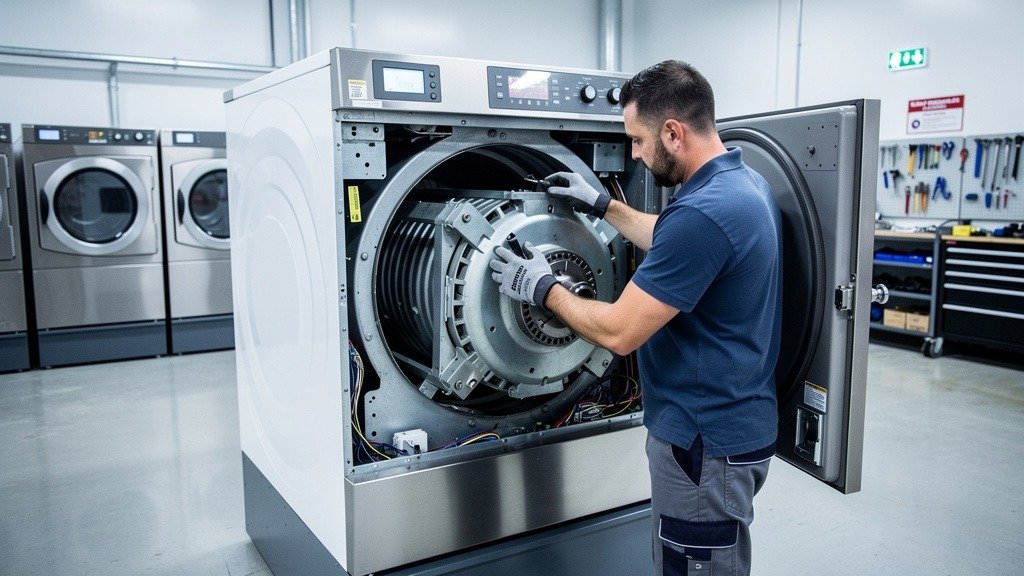
You’ll find that commercial laundry equipment repair covers a lot more ground than residential work. Technicians don’t just swap out parts and hope for the best. They’ll run electrical diagnostics, verify that airflow meets specifications, and test heat distribution under actual operating loads.
The process typically starts with systematic troubleshooting—checking control systems, safety interlocks, and mechanical components. Then comes the repair work itself, which might involve anything from replacing worn heating elements to recalibrating temperature controls. Finally, there’s operational testing to confirm everything works properly under real-world conditions.
Issues a repair visit is meant to resolve
Most service calls stem from a handful of frustrating problems. Your drum stops spinning mid-cycle. Temperatures spike dangerously high. Cycles shut down unexpectedly, leaving loads half-dried.
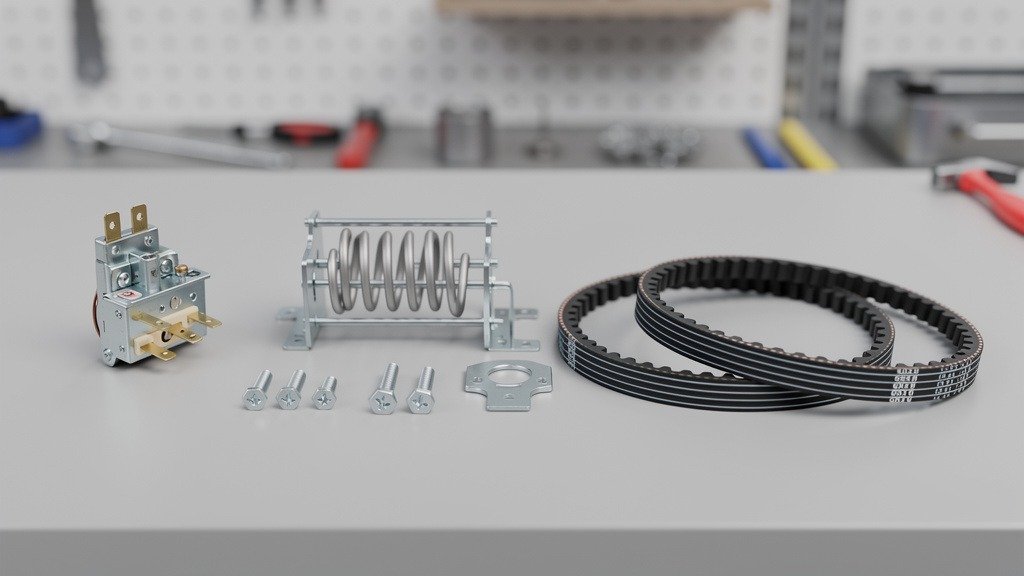
Behind these symptoms, you’ll often find control components that have given up the ghost—thermostats that can’t regulate temperature anymore, timers stuck in the wrong position, safety switches that won’t reset, or heating coils that have simply burned out from constant use.
Why businesses prioritize industrial dryer service
Smart facility managers know that vague problem reports lead to longer repair times and higher costs. That’s why the best approach involves documenting exactly what’s happening: which specific symptoms you’re seeing, when they occur, and what the machine was doing right before things went wrong.
There’s also the safety factor, which can’t be overstated. Commercial dryers operate at higher temperatures and voltages than residential units. Following proper lockout procedures and disconnecting power before any inspection isn’t just good practice—it’s essential for preventing serious injury.
Understanding what repair services entail gives you a foundation, but let’s dig into the specific problems that’ll have you reaching for the phone.
Common Commercial Dryer Problems and Their Solutions
Commercial dryers break down in predictable ways. After years of heavy use, certain components wear out first, creating patterns that experienced technicians recognize immediately. The trick is separating power and control issues from heating and airflow problems, then checking the most likely culprits in a logical sequence.
Most operators find it helpful to do basic checks before calling for service—not necessarily to fix things themselves, but to provide better information to technicians and potentially avoid unnecessary service calls.
Dryer will not start or dryer won’t run
Nothing’s more frustrating than pressing the start button and getting absolutely nothing in response. Before you assume the worst, there’s a systematic way to narrow down what’s actually wrong.
Start with the obvious stuff that’s easy to check:
- Verify power is reaching the unit. Check the main disconnect and any on-unit breakers or reset buttons.
- Make sure the door closes completely and the latch engages properly. Many no-start situations come down to door alignment issues.
- Listen for clicks or other sounds when you press start. Clicking without operation often points to start switch problems, safety controls that won’t reset, or blown fuses.
- If the control panel acts erratically—lights flickering, display showing random characters—the timer mechanism might be failing.
Important safety note: High-voltage diagnostics belong with qualified technicians. Commercial units can deliver dangerous shocks, and miswiring during DIY repairs can create fire hazards.
Dryer isn’t producing heat or loads are still damp
When clothes come out of your dryer still damp after a full cycle, heat generation and airflow are your primary suspects. Electric heating elements wear out over time, and temperature controls can fail in ways that shut off heat entirely or make it wildly inconsistent.
Here’s how to approach the problem systematically:
- Double-check cycle settings first. It’s easy to accidentally select air-dry or low-heat modes.
- Inspect lint screens and visible ductwork for obvious restrictions. Poor airflow can make even properly functioning heating systems seem ineffective.
- Feel for airflow at the exhaust vent. Strong airflow with no heat suggests heating element or control problems. Weak airflow with some heat points toward vent restrictions.
When heating elements fail, they usually fail completely rather than gradually losing effectiveness. Temperature control issues, on the other hand, often show up as inconsistent heating—sometimes working fine, sometimes not working at all.
Dryer is getting too hot or drum isn’t spinning
Overheating is a safety issue that demands immediate attention. Most often, it’s caused by restricted airflow, failed temperature controls, or both working together to create dangerous conditions.
A drum that won’t turn usually indicates mechanical problems—worn drive belts, seized bearings, or motor issues that prevent normal operation.
Quick diagnostic approach:
| What you’re seeing | Check this first | What to do next |
|---|---|---|
| — | — | — |
| Dangerous overheating | Airflow and exhaust restrictions | Stop using immediately, call for service |
| Drum completely motionless | Drive belt and obvious obstructions | Stop using, inspect for binding or foreign objects |
| Intermittent drum movement | Belt tension and motor operation | Schedule service before complete failure |
Key point: Some maintenance tasks make sense to handle in-house, but electrical diagnostics and heating system work typically require professional expertise to avoid extended downtime and safety risks.
While troubleshooting helps when problems arise, consistent maintenance prevents most issues from developing in the first place.
Essential Maintenance for Commercial Laundry Equipment
Preventive maintenance isn’t glamorous, but it’s the most cost-effective way to avoid the major headaches that shut down operations. We’re talking about protecting airflow, maintaining safe temperature control, and catching component wear before it turns into emergency repair calls.
The key is creating a maintenance routine that your staff can actually follow consistently, rather than an overly complex system that gets ignored when things get busy.
Step by step commercial dryer maintenance workflow
- Safety first, always. Disconnect power at the main disconnect and allow hot surfaces to cool completely before removing any panels or reaching into the unit. This isn’t optional—commercial dryers can cause severe burns and electrical injuries.
- Clear lint aggressively. Remove lint from screens, lint trap areas, and any accessible ductwork. Don’t just empty the obvious spots; use compressed air or vacuum tools to clear buildup from corners and crevices where lint accumulates over time.
- Inspect the entire exhaust path. Walk the vent run from the dryer to the outside termination. Look for crushed ducts, disconnected joints, and excessive lint accumulation. Back pressure from restricted exhaust can cause both poor drying performance and dangerous overheating.
- Test drum operation manually. With power off, rotate the drum by hand to check for smooth operation. Grinding, scraping, or binding indicates bearing wear or foreign object interference that can lead to drive system failure.
- Examine temperature control components. Look for signs of overheating around thermostats and safety switches—discolored wiring, melted plastic, or burnt odors. These components fail gradually, often giving warning signs before complete failure.
- Verify control operation. Test start switches, timers, and other user controls for proper operation. Intermittent problems often get worse over time, so addressing them early prevents more complex repairs later.
- Inspect heating elements carefully. On electric units, heating coils can develop hot spots or break internally without obvious external damage. If you notice uneven heating or longer dry times, schedule professional diagnosis rather than guessing at parts replacement.
Preventive checklist and when to call for service
Assign clear responsibilities to avoid maintenance tasks falling through the cracks. Daily lint removal works best when operators handle it as part of their routine. Weekly visual inspections fit well with maintenance staff schedules. More detailed internal inspection and testing should happen on a planned schedule with qualified technicians.
The trade-off is straightforward: scheduled maintenance downtime prevents much longer emergency outages, but it does require planning around operational needs.
Call for professional service when you see repeated safety trips, evidence of overheating, or control problems that don’t respond to basic troubleshooting. These symptoms often indicate component failures that require proper diagnosis and electrical testing.
Understanding maintenance helps preserve your equipment, but knowing what affects overall lifespan helps with longer-term planning.
Maximizing the Lifespan of Your Industrial Dryer
Brand names and fancy features don’t determine how long your commercial dryer lasts. What really matters is daily operating conditions, airflow management, and how quickly you respond to early warning signs before they become major problems.
The most reliable approach combines consistent maintenance with prompt attention to performance changes. When dry times start creeping up or temperature control becomes inconsistent, that’s your equipment telling you something needs attention.
What shortens commercial dryer service life most often
Heavy-duty dryers fail prematurely when heat and airflow get out of balance. The resulting stress affects multiple components and accelerates wear throughout the system.
Common lifespan killers include:
- Exhaust restrictions that force the unit to work harder and run longer to achieve proper drying. This is why commercial dryer vent cleaning isn’t optional—it’s essential preventive maintenance.
- Repeated overheating cycles that stress temperature controls beyond their design limits. Failed thermostats and safety switches often result from prolonged exposure to excessive temperatures.
- Electrical problems that show up as intermittent starting or erratic operation. These issues often trace back to worn contacts in start switches, blown fuses, or timer mechanisms that have accumulated too much wear.
- Heating system degradation from overworked heating elements that can’t maintain stable, consistent output.
Strategies that extend lifespan without over-servicing
Focus your effort where it actually makes a difference rather than replacing parts that still have useful life remaining. The most effective approach assigns clear ownership: operators document symptoms and track performance trends, while maintenance staff or service vendors handle measurements and component evaluation.
- Use symptom-based decision making. When the drum stops spinning, focus on drive components and safety interlocks. When heating becomes unreliable, concentrate on heating elements and temperature controls.
- Treat airflow as the foundation of everything else. Yes, vent cleaning means planned downtime, but ignoring airflow problems creates much more expensive repairs down the road.
- Escalate overheating situations immediately. Once temperature control starts failing, the damage can cascade quickly through multiple expensive components.
When to involve commercial appliance technicians
Bring in professional technicians when problems recur after basic troubleshooting, when you observe any signs of overheating, or when electrical components might be involved. Misdiagnosis in commercial equipment can cause additional damage and extend downtime significantly.
The goal isn’t to avoid professional service—it’s to use it strategically when expertise and specialized tools can resolve problems efficiently and safely.
When professional repair becomes necessary, choosing the right service provider makes all the difference in getting reliable, long-lasting results.
Frequently Asked Questions About Commercial Dryer Repair
First step in servicing a commercial dryer
Q: What is the first step when servicing a commercial dryer? A: Safety and documentation come before everything else. Disconnect power at the main disconnect or circuit breaker, and if you’re working with a gas unit, shut off the gas supply as well. Then verify the exact model and serial number so diagnostic procedures match your specific machine configuration.
- Document the problem in clear, operational terms: the unit won’t start at all, heating is absent or inconsistent, temperatures are running too high, or the drum isn’t turning.
- Note whether you’re dealing with a stacked washer/dryer combination or standalone units, since access panels and airflow configurations vary significantly between designs.
- If you detect any burning odors or see visible signs of overheating, stop operation immediately and schedule professional repair rather than attempting further troubleshooting.
Maintenance needs and vent cleaning frequency
Q: What kind of maintenance does a dryer need? A: Effective maintenance centers on three critical areas: temperature control, airflow management, and mechanical wear components. For most commercial operations, the highest-impact tasks are aggressive lint control, airflow verification, and monitoring safety controls that prevent dangerous overheating.
- Monitor temperature control performance for signs of drift that might indicate failing thermostats or safety switches.
- Track cycle behavior patterns, since worn timer mechanisms can cause under-drying, over-drying, or erratic operation.
- For electric units, heating performance problems often involve heating elements, control wiring, or temperature regulation components—situations where professional electric dryer repair services provide the safest and most reliable solutions.
Q: How often should commercial dryer vents be cleaned? A: Vent cleaning frequency depends on several factors: daily load volume, the type of materials being dried, total duct length and complexity, and your facility’s risk tolerance for downtime and safety issues.
Most successful operations establish regular inspection schedules and increase cleaning frequency when performance indicators change—longer dry times, higher operating temperatures, or any complaints about burning odors.
- Schedule additional inspections immediately after any airflow-related problems: loads coming out damp, overheating episodes, or unusual odors during operation.
- Assign clear responsibilities: facilities staff handles routine inspections, qualified vendors perform thorough cleaning, and management approves the maintenance schedule and budget.
Life expectancy and when to repair vs replace
Q: What is the life expectancy of a commercial dryer? A: Life expectancy varies dramatically based on duty cycle intensity, installation quality, and maintenance consistency. Rather than relying on arbitrary age limits, base replacement decisions on downtime impact, parts availability, and whether recurring problems are escalating in frequency or severity.
- Consider the trade-off: investing in proactive service and quality repairs reduces operational disruption, but replacement might make more sense when heating system or drive problems keep returning despite professional attention.
Common problems a repair provider can address
Professional service providers that specialize in industrial dryer service and commercial laundry equipment repair routinely handle the four most common complaint categories: no-start conditions, absent or inconsistent heating, dangerous overheating, and drum rotation problems.
When units won’t start, the usual suspects include failed start switches or blown fuses. When drums won’t turn, drive system components or safety controls typically need professional diagnosis and repair.
Q: What should a manager tell the technician for faster troubleshooting? A: Provide specific symptom descriptions, any error codes or warning lights, details about load types and sizes, and timeline information about when the problem first appeared.
Mention whether the issue happens consistently or intermittently, and whether it affects a single unit or multiple machines. This information helps technicians bring the right tools and parts, reducing diagnostic time and minimizing downtime.
To wrap things up, maintaining your commercial dryers properly is essential for operational efficiency and workplace safety.
Key Takeaways for Commercial Dryer Maintenance and Repair
Reliable commercial dryer operation comes down to two fundamental practices: responding to symptoms with consistent diagnostic procedures, and scheduling proactive maintenance before minor issues disrupt your operations. Whether you need emergency laundromat dryer repair or you’re developing a comprehensive industrial dryer service plan, the objective remains the same: safe, predictable drying performance that supports your business goals.
Symptoms that justify immediate troubleshooting
When your dryer won’t start, stops producing heat, runs dangerously hot, or the drum won’t turn, treat these as operational emergencies rather than minor inconveniences.
- Document problems in clear, specific terms that your staff can communicate effectively, then verify safety conditions before attempting any diagnostic work.
- Escalate overheating situations immediately, since temperature control failures often worsen rapidly and can damage multiple expensive components.
Components that often drive repeat calls
The usual suspects include failed thermostats, malfunctioning safety switches, worn timer mechanisms, defective start switches, blown fuses, and degraded heating elements. These components aren’t interchangeable between different models and manufacturers, so accurate identification matters significantly for efficient repairs.
This is particularly important for commercial laundry equipment repair and electric dryer repair services, where using incorrect parts can create safety hazards and void warranties.
Proactive service for fewer disruptions
Business dryer maintenance operates on a simple principle: trading small amounts of planned downtime for fewer emergency shutdowns that happen at the worst possible times.
Assign routine checks to on-site staff who interact with the equipment daily, and reserve specialized diagnosis and complex repairs for qualified technicians who have the tools and expertise to work safely with commercial-grade electrical and heating systems.
Your next step should be scheduling a professional assessment or service appointment for your commercial laundry equipment, especially if you’ve noticed any of the warning signs we’ve discussed.