
Understanding Dryer Repair Service Areas in San Diego
Look, when your dryer decides to call it quits on a Sunday night with a week’s worth of laundry staring you down, you need to know who’s actually going to show up. A dryer repair service area isn’t just some random circle drawn on a map—it’s the real coverage zone where a tech team can actually reach your place, bring the right parts, and stick around for follow-up if something goes sideways.
Here’s the thing most people don’t realize: response times, those annoying trip fees, and whether they’ve even got your part in stock all depend on how far you are from their home base. Traffic patterns matter too. Getting from downtown to La Jolla during rush hour? That’s a different beast than cruising over to Chula Vista on a Tuesday morning.
For anyone hunting down dryer repair in San Diego neighborhoods, knowing these boundaries upfront saves you from that awkward “sorry, we don’t actually service your area” call after you’ve already rearranged your schedule.
What a San Diego dryer repair service area actually includes
Real coverage goes way beyond dropping a pin on Google Maps. We’re talking about consistent scheduling options across the entire San Diego County repair network—from those pricey coastal spots like La Jolla all the way down to South Bay cities like Chula Vista.
Most service calls bundle travel costs with the actual diagnostic time. They’ll come out, figure out what’s wrong, and if it’s fixable in one trip, great. Need special parts? They should give you a straight quote and explain the game plan. No mystery charges showing up later.
The best teams don’t just promise coverage—they actually deliver it. Same scheduling availability whether you’re dealing with ocean air corrosion in Pacific Beach or inland dust issues in Escondido.
Same-day service and when you can actually get it
Same-day usually means calling before their cutoff time (often around noon) and snagging whatever appointment slots open up later that day. Depends entirely on how busy their techs are and whether someone else’s repair ran long.
Plenty of local teams work weekends now. Makes sense—dryers don’t care if it’s Saturday when they decide to stop heating.
Want urgent service? Have your address ready, know your model number, and describe exactly what’s happening. The more specific you are (“makes a grinding noise for 30 seconds then stops” versus “it’s broken”), the better they can prioritize your call and bring the right tools.
Transparent pricing and that 90-day warranty thing
Dryer repair costs bounce around based on what’s actually broken, how complicated your specific brand gets, and whether they need to hunt down some manufacturer-specific widget. Common stuff like heating elements, belts, or motor issues—each has its own typical price range. Heating and motor problems usually cost more than simple wear-and-tear fixes.
Good providers tell you the price before they start working. Period. No “oh, by the way” charges after they’re elbow-deep in your machine.
That 90-day warranty? Read what it actually covers. Parts and labor, or just parts? How do you claim it if something acts up again? Keep your paperwork, call their service line, explain what’s happening, and they should schedule a return visit. Just remember—this is separate from whatever manufacturer warranty might still be active.
Brands they handle and what to tell them when you call
Most repair teams work on standard brands and the fancier stuff too. Ask specifically about your brand—Samsung, LG, Whirlpool, GE, Maytag support. Got one of those combo washer-dryer units? Make sure they’ve actually worked on combined systems before. The access points and diagnostics can be totally different.
Quick note: if someone starts talking about refrigerants for a standard dryer, that’s weird. Those apply to cooling systems, not your typical home dryer. Mention any unusual features when you’re booking.
Common symptoms worth reporting:
- No heat coming through
- Drum won’t spin at all
- Strange noises (grinding, squealing, thumping)
- Won’t turn on
- Shuts off randomly mid-cycle
Typical workflow looks like this:
- You schedule, they confirm they can reach you
- Tech shows up, diagnoses, gives you a quote
- You approve, they fix it with decent parts
- They test everything and clean up
Now let’s get into where exactly these services actually reach across San Diego.
Comprehensive San Diego Dryer Repair Coverage Map
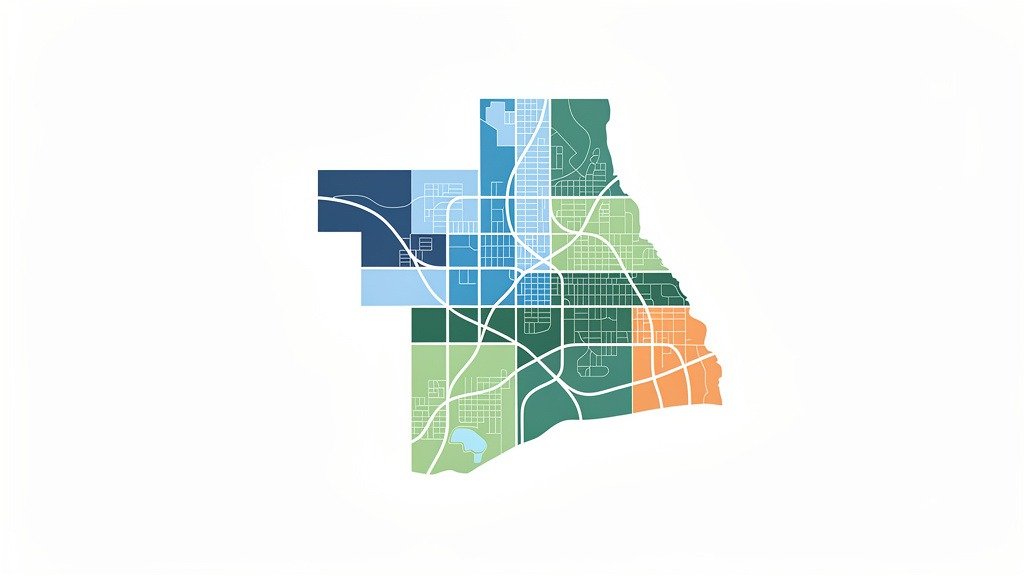
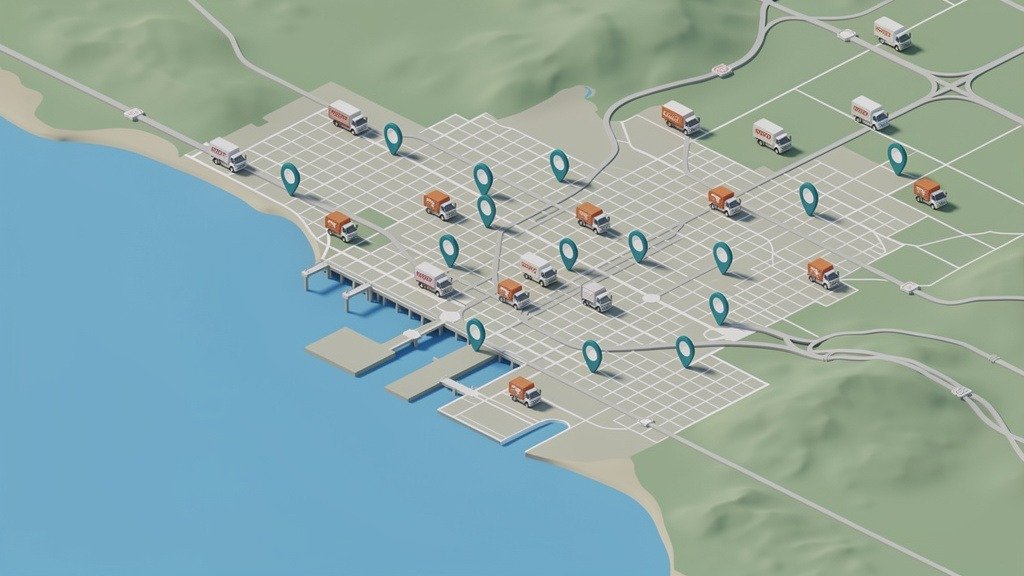
San Diego County is huge. Your repair service shouldn’t depend on whether you’re in some coverage dead zone. A solid team maps out their actual service radius, routes techs efficiently through neighborhoods, and lets you verify coverage by zip code before you even pick up the phone.
How coverage really works and confirming they’ll actually show up
A real coverage map shows the geographic boundaries where dispatch can reliably reach you without crazy delays or surprise “we can’t make it today” calls.
Core San Diego neighborhoods that most teams hit: La Jolla, North Park, Point Loma, Pacific Beach. These areas usually get routed from the same tech corridors, so scheduling stays pretty consistent.
Wider San Diego County cities often included: Chula Vista, Escondido, Oceanside. Coverage here depends more on which provider you’re calling and how they’ve got their daily routes set up.
Quick confirmation trick: use their zip code lookup if they’ve got one online, or just call and ask straight up about their current service radius from wherever they dispatch from.
Reality check: even if your zip code is “covered,” appointment timing still depends on traffic and whether they’ve got your part on the truck for a same-visit fix.
What their coverage map should actually show you
Any decent company website shows you a visual map with clear boundary lines and major service corridors across San Diego County. If it’s interactive, you should be able to punch in your zip and get a straight “yes,” “limited coverage,” or “nope” answer instead of making you guess.
For appliance repair teams in San Diego, the map should also note whether washer-dryer combos and specialty units get the same standard service call treatment or need a specialist. Some advanced designs involve sealed systems or refrigerants—different skill set, different dispatch process.
Service call fees and what you’re actually paying for
Service call fees typically cover getting someone to your place, doing a basic safety check, and spending time to diagnose the real problem (not just the obvious symptom). After they figure out what’s wrong, professional teams give you an upfront quote that breaks out parts versus labor. No hidden surprises.
Cost ranges make more sense when you think about complexity levels: Simpler repairs: belt replacement, lint blockages, door switch problems. More involved repairs: heating element swaps, motor issues, control board or sensor problems, certain combo washer-dryer fixes.
Final price usually comes down to parts availability, how long the labor takes, and brand-specific quirks.
Four steps from your call to a working dryer
- Schedule based on your zip code and current tech routing
- Get diagnosis and upfront pricing so you can approve work before they start
- Repair using quality parts (confirm they’re licensed and insured while you’re at it)
- Test and verify heat, airflow, cycle timing, safe operation before they pack up
Understanding what you might pay is obviously the next big question.
Cost of Dryer Repair in San Diego What to Expect
Dryer repair pricing in San Diego breaks down into two chunks: getting someone out to look at it, plus whatever parts and labor the actual fix requires. Decent companies explain their pricing upfront and stick to it. No surprise charges when your laundry routine is already disrupted enough.
Pricing can shift a bit depending on where you are—routing to La Jolla versus Chula Vista affects travel time, which can influence scheduling and fees.
Service calls and what that visit actually includes
Service call fee covers sending someone to your place to figure out what’s wrong and fix it if possible on the spot. Usually includes travel within their coverage area, diagnostic testing (heat, airflow, drum movement, controls), and a written or verbal estimate.
Here’s the catch: if your dryer isn’t heating, it might be clogged venting or poor airflow mimicking a parts problem. Good diagnosis matters before you approve any repairs.
Repair costs by job type
Real costs vary, but most repairs fall into predictable categories based on complexity and parts availability.
| What’s broken | What it fixes | Cost range | Price factors |
|---|---|---|---|
| — | — | — | — |
| Heating element | No heat or weak heat | Mid to higher | Part cost varies by brand and model |
| Belt | Drum won’t turn | Lower to mid | Usually quick if access is straightforward |
| Thermostat or sensor | Overheating or no heat | Mid | Requires testing and correct part matching |
| Combo washer-dryer | Multiple symptoms | Mid to higher | More disassembly, longer diagnostic time |
| Sealed-system problems | Cooling components, refrigerants | Higher or referral | Not every shop handles sealed systems |
Trade-off: single-visit repairs work great for common parts, but unusual models might need special ordering, which changes timing and total labor costs.
What drives your final bill
Final price depends on part availability, your specific brand, what the diagnosis actually finds, and repair access. Stacked units, tight closets, complicated vent routing—all of that can add labor time even for small part replacements.
Quality check: ask about warranty terms. Many providers offer 90-day coverage on their repair work.
From booking to working dryer
- Schedule and share model details plus symptoms
- Diagnosis and quote approval before any work starts
- Repair using appropriate parts based on testing findings
- Test and verify heat, full cycle completion, safe operation
Deciding whether to repair or replace involves more than just the immediate cost estimate.
Repair Versus Replacement Applying the 50/50 Rule for Dryers
When your dryer stops heating or takes forever to finish cycles, the repair-versus-replace decision shouldn’t be emotional guesswork. The 50/50 rule gives you a practical framework: consider replacement when the repair estimate approaches half the cost of a comparable new dryer and your current unit is already past roughly half its expected lifespan.
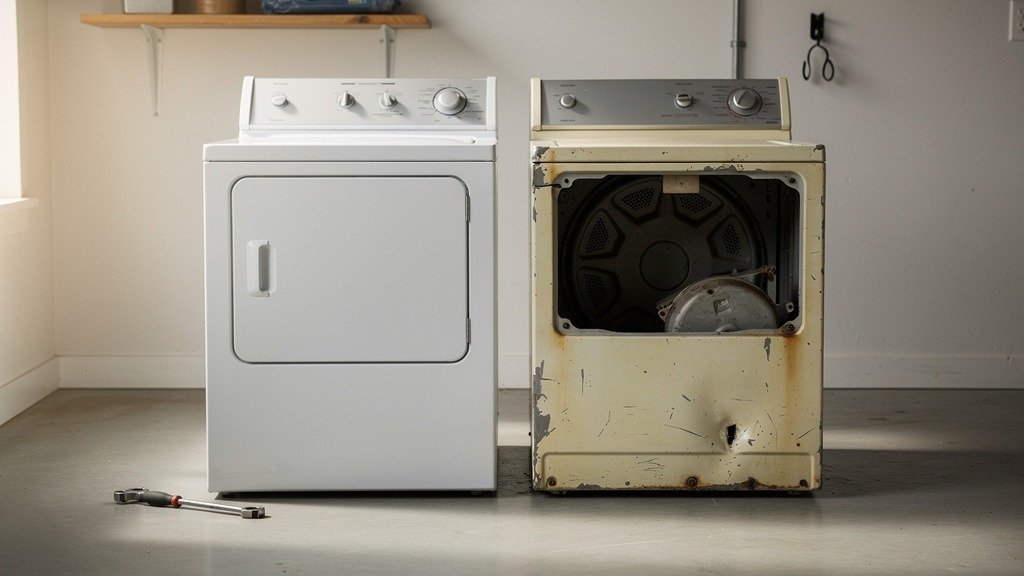
This isn’t a guarantee—it’s a structured way to protect your budget while getting your laundry routine back on track.
How the 50/50 rule actually works
Modern dryers typically last somewhere in the low double-digit years with normal home use. But real-world results depend heavily on venting quality, load sizes, and basic maintenance.
Use the 50/50 rule as a decision checklist: Age factor: Older units have higher chances of needing a second repair after the first fix. Cost comparison: Compare the full repair estimate (parts and labor) to the delivered, installed price of a new comparable unit. Efficiency consideration: Newer models might reduce operating costs, but savings only matter if you actually run frequent loads.
Reality check: if your dryer has poor airflow, it’ll keep overheating and damaging components repeatedly. Replacing parts without fixing venting issues wastes money.
Decision table for San Diego households
| What to consider | Repair usually wins | Replace usually wins |
|---|---|---|
| — | — | — |
| Cost ratio | Repair is well under half of new unit cost | Repair approaches half of new unit cost |
| Age and track record | Earlier in lifecycle, consistent past performance | Later in lifecycle, multiple recent issues |
| Problem complexity | Clear fault that’s diagnosable and fixable | Repeated symptoms or multiple systems involved |
| Unit type | Standard dryer, readily available parts | Specialty units, combo washer-dryer with sealed systems/refrigerants |
Service note: coverage across San Diego County can influence availability for homes in places like La Jolla or Chula Vista, so confirm dispatch options before committing to replacement logistics.
Professional repair process from first call to cleanup
- Scheduling: Share model info and symptoms so dispatch routes the right tech with likely parts
- Diagnosis and quote: Tech tests safely, provides upfront pricing with transparent terms
- Repair: Complete work using appropriate replacement components, document what changed
- Testing and verification: Run through verification cycle, clean work area, review safety checks
Once you’ve decided to repair, knowing the timeline and process helps set realistic expectations.
The San Diego Dryer Repair Process and Timeline
Getting back to reliable laundry usually comes down to a consistent workflow: schedule, inspect, quote, repair, verify. Professional process reduces repeat visits, prevents surprise charges, and helps techs diagnose the actual cause instead of just treating symptoms.
Coverage and timing also depend on the provider’s service radius, especially for homes spread across areas as different as La Jolla and Chula Vista.
Step-by-step from booking to completion
- Scheduling: Share dryer type (electric, gas, combo washer-dryer), symptoms (not heating, long cycles), and location. Dispatch can confirm availability and set expectations for response time based on current routing.
- Diagnosis and quote: Tech checks airflow, heat generation, drum movement, controls, then gives you upfront pricing for parts and labor before starting any work. Ask what’s required versus optional for safe, reliable operation.
- Repair: Tech completes repair using correct replacement parts for your model and serial range when possible. Some jobs finish in one visit; uncommon parts might require a return appointment.
- Testing and cleanup: Tech runs heat and tumble test, confirms normal cycle behavior, cleans work area. Pro tip: keep the area around your dryer clear so panels can be removed safely and efficiently.
Service call fees and transparent pricing
Service call fee typically covers travel within the coverage area plus diagnostic time to identify the most likely problem. Transparent providers separate the service call from repair costs, then explain their no-hidden-costs policy in writing before work starts.
Repair cost ranges and price factors
Costs vary, but many repairs fall into recognizable bands: Belt replacement: often lower-to-mid range, depending on disassembly time and model layout. Heating element replacement: often mid-to-higher range, influenced by part cost and access difficulty. Control or sensor issues: price varies widely by brand and whether calibration is needed.
Final price depends on parts availability, labor time, brand complexity, and whether you’ve got a specialty design. For certain heat-pump laundry appliances, refrigerants might be involved, so clarify appliance type during scheduling to avoid delays.
Ensuring your repair gets handled by qualified professionals is crucial for safety and results.
Ensuring Quality Dryer Repair Licensing and Certifications
Choosing licensed and insured techs is one of the most practical ways to protect safety, control costs, and get your laundry routine back to normal. Licensing, certifications, and documented training signal that a team can diagnose the real problem, quote accurately, and complete work to consistent standards across San Diego, including La Jolla and Chula Vista.
Service call coverage and transparent pricing structure
Service call fees typically cover on-site diagnostic process, basic safety checks, and written or verbal upfront quotes before any repair work begins. Professional estimates should separate parts and labor, explain alternatives, and commit to no hidden costs.
Common price patterns vary by model and availability:
- Belt replacement often falls on the lower end of typical repair ranges
- Heating element replacement often hits mid-to-higher range due to part costs and access time
- Combo washer-dryer repairs can trend higher when multiple systems interact
Final pricing gets influenced most by parts availability, brand complexity, labor time, and whether the issue is electrical, airflow-related, or control-board related.
Four-step workflow for single-visit success
- Schedule with model details and symptoms to pre-plan parts
- Diagnose and quote with clear approval before work begins
- Repair using quality parts matched to your specific unit
- Test and clean up to confirm heat, airflow, cycle timing, safe operation
Practical constraint: incomplete symptom information often causes repeat trips, so have one person handle all the details sharing.
Certifications, background checks, California compliance
Manufacturer training and documented experience reduce misdiagnosis, especially on stacked units and combo washer-dryer platforms. Background checks add basic on-site trust for occupied homes.
California licensing requirements depend on scope. If work involves sealed systems or refrigerants, ask for EPA Section 608 Certified credentials—that certification is specific to regulated refrigerant handling. Reputable providers should confirm compliance with all state and local regulations and show documentation when requested.
Common questions come up during the repair process, so let’s address the frequent ones.
Repair Versus Replacement Analysis and 50/50 Rule
When your dryer disrupts the laundry routine, the 50/50 rule works as a quick decision filter for repair versus replacement. Compare the repair estimate against replacement cost using a clear cutoff so the decision stays logical, not emotional. This framework works whether you’ve got a standard dryer or combo washer-dryer.
Practical 50/50 rule worksheet
Use this checklist before approving work, even if the provider expects single-visit completion.
- Request upfront quote separating parts and labor with no hidden costs
- Compare repair total to replacement price for comparable unit you’d actually buy
- Consider downtime cost (laundromat trips, rental impact, household schedule disruption)
- Confirm whether tech can diagnose and fix on-site or parts ordering is likely
- Identify special-system risk: some ventless or heat-pump designs involve refrigerants, changing repair complexity and replacement value
When repair wins versus when replacement wins
| Signal | What it usually means |
|---|---|
| — | — |
| Clear, isolated failure with stable drum and heat system | Repair often provides better value |
| Repeated symptoms, multiple error codes, recent prior repairs | Replacement risk may be lower |
| Parts availability uncertain | Replacement may restore reliability faster |
| You need predictable turnaround | Choose option with shortest confirmed completion path |
Practical constraint: if techs can’t verify root cause during diagnosis, estimates can shift after disassembly. Manufacturer-trained teams reduce this risk, but no provider eliminates it completely.
Quick San Diego example using real neighborhoods
Homeowner in La Jolla might prioritize faster completion, while landlord in Chula Vista might prioritize predictable cost and documentation. Either way, the 50/50 rule keeps decisions aligned to budget, timelines, and reliability instead of pressure tactics.
Next, review licensing requirements so repair decisions get backed by verified qualifications.
Licensing Requirements for Appliance Repair
Do you need a license to repair appliances in California
Not always. California appliance repair requirements vary based on work type, business structure, and whether jobs cross into regulated trades. Safest approach: ask providers to explain which credentials apply to your specific repair before authorizing work, especially when disrupted laundry routines demand quick, correct fixes.
When licensing and special handling matters most
Dryer and combo washer-dryer work is often mechanical and electrical, so providers might diagnose and fix common problems without trade-specific licensing in many situations. Exception: when repairs overlap with regulated areas. Jobs involving refrigerants (more common in refrigeration and some specialty systems) can trigger additional compliance requirements, so confirm technician qualifications for that scope before scheduling.
Since rules can be situation-specific, practical customer takeaway is documentation. Professional teams should state in writing that jobs will be performed in compliance with applicable state and local regulations for San Diego service locations like La Jolla and Chula Vista.
What to ask before approving service calls
Quick checklist to avoid surprises and protect your property:
- Ask what service call fee covers, whether it’s credited toward repair
- Request upfront quote separating parts and labor
- Confirm goal is single-visit repair when parts are available
- Ask how company prevents hidden costs, including authorization rules for additional work
Example: if techs find wiring issues during dryer visits, customers should require updated written approval before any added parts get installed.
Next, review the most common San Diego dryer repair questions homeowners ask about scheduling, pricing, and expected results.
Frequently Asked Questions About San Diego Dryer Repair
Dryer repair cost questions in San Diego
Q: How much does it normally cost to repair a dryer, including the service call fee? A: Dryer repair pricing usually has two parts: service call fee (to evaluate the unit) plus parts and labor costs if repairs get approved. Clear estimates should be upfront quotes matching final invoices, with no hidden costs.
- Service call fees commonly include travel within the dryer repair service radius, on-site diagnostic process, written or texted estimates
- Ask whether service call fees apply toward repair totals if you proceed, since policies vary
Q: What are typical cost ranges for common dryer repairs like heating elements or belts? A: Costs vary by model and access, but most customers see repairs falling into tiers rather than fixed prices. Belt replacement is often lower-cost than full heating system issues requiring heating element diagnosis and part replacement.
| Common repair type | Typical price tier | What drives the tier |
|---|---|---|
| — | — | — |
| Belt replacement | Lower | Labor time, disassembly depth |
| Thermal fuse or sensor | Lower to mid | Testing time, part availability |
| Heating system work | Mid to higher | Heating element diagnosis, wiring checks, part cost |
| Control board or motor | Higher | High part cost, longer labor |
Q: What factors influence the final price? A: Biggest drivers are parts availability, brand and model complexity, labor time. Stackable units, ventless units, combo washer-dryers can take longer to access and test, increasing labor even when failed parts are small.
Who fixes dryers in my area and how service coverage works
Q: Who fixes dryers in my area, and can you cover specific neighborhoods? A: Look for teams listing dryer repair in San Diego neighborhoods clearly and confirming dispatch by address before booking. Providers with local dryer repair coverage should state whether La Jolla and Chula Vista are inside daily routes without guessing.
- Coverage often gets organized as San Diego County appliance repair zones supporting routing and parts staging
- If you need same-day dryer repair in San Diego, ask about cut-off times and stock-on-truck parts for your brand
Repair process, timeline, warranty questions
Q: How long does it usually take to fix a dryer, and can it be done in a single visit? A: Many problems can be diagnosed and resolved on-site, but single visits depend on safe access, accurate diagnosis, and whether right parts are available. Reliable workflow protects laundry routines by focusing on root-cause testing, not guesswork.
- Scheduling: Confirm address, model details, symptoms
- Diagnosis and quote: Tech diagnoses and fixes only after approval
- Repair: Confirm compatibility before installation
- Testing and cleanup: Verify heat, airflow, cycle completion before leaving
Q: Is it worth it to repair a dryer, and what about warranties and special systems? A: Repair value depends on estimate, age, and how quickly you need reliable operation. Ask for transparent pricing, confirm provider is licensed and insured, request warranty terms in writing, like 90-day warranty on covered parts and labor when offered. For specialized systems, note that some heat-pump units involve refrigerants, which may require additional qualifications and parts lead time.
To summarize, choosing the right dryer repair service in San Diego involves understanding coverage, costs, and quality indicators.
Key Takeaways for San Diego Dryer Repair Success
When dryers interrupt laundry routines, fastest path to reliable operation is choosing providers who can diagnose and fix root causes with upfront quotes and no hidden costs across San Diego County, from La Jolla to Chula Vista. Best outcomes come from clear local dryer repair coverage, realistic pricing expectations, and processes designed to complete work in single visits when parts are available.
Pricing takeaways to prevent surprises
Service call fees are on-site diagnostic charges typically covering dispatch, inspection, estimates, even if customers decline repairs. After approval, final bills should clearly separate parts and labor and match quoted scope.
Common repairs often fall into tiers rather than universal prices: heating element replacements and control or motor-related work tend to be higher-cost categories, while belt replacement and sensor or switch issues are often lower to mid-range, depending on model and access.
Final pricing usually changes based on parts availability, labor time, brand complexity, and whether units are standard dryers or combo washer-dryers. Ask whether preventive items like vent cleaning are recommended, and confirm what’s included versus optional.
Repeatable repair workflow to request
- Schedule based on confirmed service area and arrival window
- Diagnose and quote before authorizing any work
- Repair using quality parts aligned to quoted scope and warranty terms
- Test and clean up to verify heat, airflow, cycle time, safe operation
Practical constraints to remember
If job scope mentions gas work, electrical updates, or even refrigerants, request clear documentation, safety steps, and who’s responsible for each task before work begins.